
Last Monday at 3:00 PM, a mother in Dubai opened a school bag to find the same frustrating scene: a soggy sandwich and three single-use plastic bags headed for the bin. It’s a struggle many parents in our Citron community face daily. You want to provide a nutritious, exciting meal, but food often ends up mixed together and unappealing. Switching to a japanese lunch box turns this routine into a sophisticated, mess-free experience. These containers are designed for the modern, conscious adventurer who values both function and flair.
You likely agree that lunch should be the highlight of your child's day, not a source of waste. We’re here to help you reclaim that spark. This guide will show you how to master the art of the bento to ensure every meal is balanced, beautiful, and completely sustainable. We’ll walk through the best ways to pack diverse food groups, keep textures crisp, and use innovative designs to simplify your morning hustle. Get ready to transform your family’s mealtime journey into an organized, joyful success.
Key Takeaways
- Master the art of the bento by understanding how intentional compartmentalization turns a simple meal into a structured, waste-free experience.
- Simplify your morning routine with the traditional 4:3:2:1 nutritional ratio, designed to take the guesswork out of packing a balanced meal for your little ones.
- Compare traditional Magewappa wood with modern, durable alternatives to find the perfect japanese lunch box that fits your family's sustainable lifestyle in the UAE.
- Learn the professional 5-step packing method to ensure every meal stays fresh, crisp, and visually stunning from the kitchen to the playground.
- Discover how modern design and leak-proof innovation can transform mealtime for fussy eaters, turning daily nutrition into a joyful adventure.
What is a Japanese Lunch Box? Understanding the Bento Tradition
A japanese lunch box is far more than a simple vessel for food. It represents a centuries-old culinary philosophy known as Bento. At its heart, this is a single-portion, home-packed meal designed for balance, nutrition, and beauty. While a traditional Western lunch box often relies on a single open cavity, the Japanese approach prioritizes compartmentalization. This structure ensures that every ingredient retains its integrity, preventing a flavor-clashing mess by the time the school bell rings in Dubai or Abu Dhabi.
The tradition centers on "Washoku," or the harmony of food. This isn't just about taste; it's about a visual feast. A proper bento incorporates five colors: red, green, yellow, white, and black. These colors signal a diverse range of nutrients, ensuring your child gets a spectrum of vitamins in every bite. We've seen the evolution from humble bamboo leaf wraps to the sophisticated, eco-friendly gear of 2026. Today's boxes combine this ancient wisdom with modern, sustainable materials like food-grade silicone and BPA-free Tritan, making them a chic choice for the conscious parent.
The Core Purpose of Bento Design
Function meets form in every corner of the box. Portion control is a major benefit. In Japanese nutrition standards, the milliliter capacity of a box often correlates directly to the caloric content of a balanced meal. A 600ml container provides roughly 600 calories, which simplifies meal planning for busy families. Separation is equally vital. Dedicated compartments keep wet fruit away from crisp crackers. It's about portability too. These boxes fit perfectly into the "on-the-go" lifestyle of active UAE families, staying secure during the morning commute or a weekend desert adventure.
Bento vs. Standard Lunch Boxes: Why the Switch?
Say goodbye to the "soggy sandwich" problem. Traditional single-cavity containers allow moisture to migrate, often ruining textures and appetites. Modern lunch box containers solve this with leak-proof seals and individual walls. This design naturally encourages food variety. Instead of one large main, you can pack five different snack-sized portions. The psychological impact is huge. Children are 30% more likely to try new vegetables when they're presented in a colorful, organized, and visually appealing way. It turns a routine meal into a moment of discovery and joy for your little adventurer.
The Nutritional Framework: Packing the Perfect Ratio
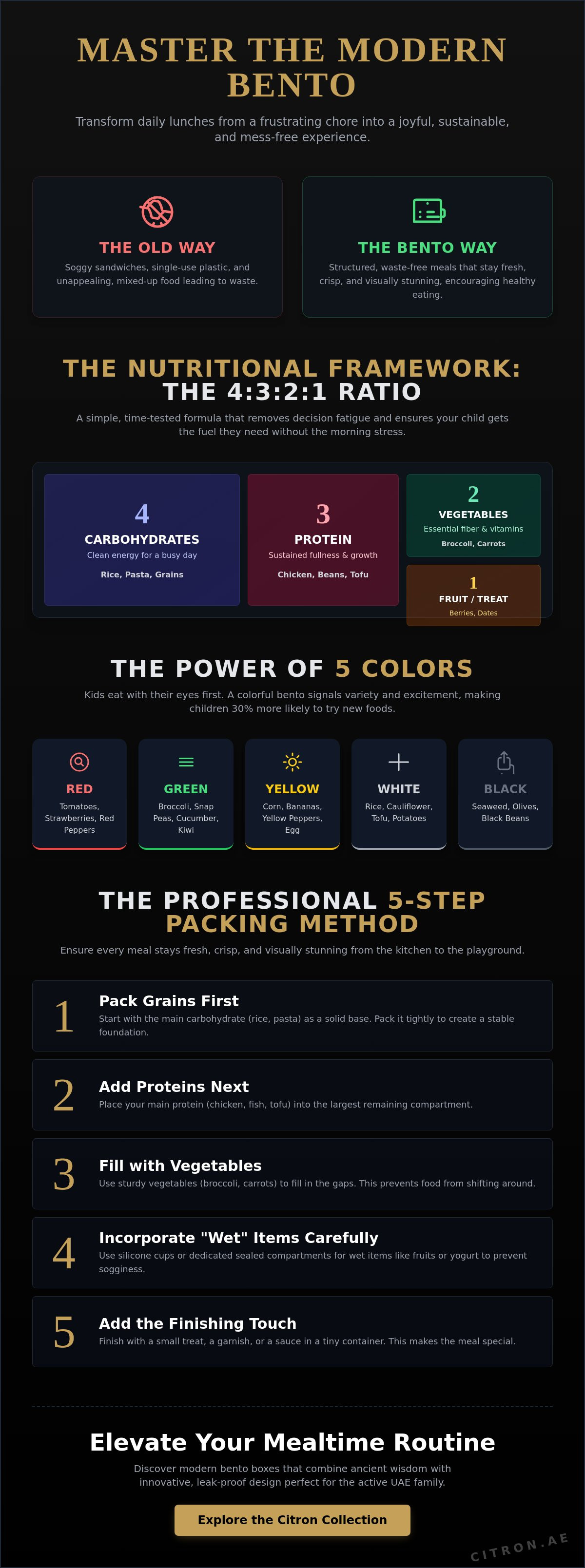
Packing a japanese lunch box shouldn't feel like a complicated puzzle. It's about a simple, time-tested formula. The traditional 4:3:2:1 ratio removes the decision fatigue for tired parents. This framework ensures your child gets the fuel they need without the morning stress. While social media often highlights elaborate food art, your priority is balance. A complete meal beats a cute one every single time. Scientific research published in 2022 highlights the nutritional benefits of bento, showing how these structured portions encourage healthier eating habits from a young age. It's about creating a sustainable routine that works for your family journey.
Breaking Down the 4:3:2:1 Rule
Divide your container into four distinct parts to master the bento lifestyle. This method ensures every food group is represented in the right amounts for growing bodies. It turns a blank box into a functional roadmap for meal prep.
- 4 Parts Carbohydrates: Rice, pasta, or whole grains provide the clean energy needed for a busy school day.
- 3 Parts Protein: Chicken, beans, tofu, or eggs provide sustained fullness and support muscle growth.
- 2 Parts Vegetables: Steamed broccoli, snap peas, or carrots deliver essential fiber and vitamins.
- 1 Part Treat or Fruit: A small reward like berries or a sweet date helps finish the meal with a smile.
The Power of Color in Meal Prep
A vibrant meal is an eaten meal. Japanese tradition uses the Five Colors rule to ensure a wide range of micronutrients. Red, yellow, green, black, and white foods create a visual feast that naturally balances vitamins and minerals. Kids eat with their eyes first. A colorful japanese lunch box signals variety and excitement to a child's brain, making them 30 percent more likely to try a new food item.
- Red: Strawberries, cherry tomatoes, or red bell peppers.
- Yellow: Sweet corn, tamagoyaki (Japanese omelet), or pineapple.
- Green: Edamame, cucumber, or steamed spinach.
- Black/Dark: Seaweed (nori), black sesame seeds, or purple grapes.
- White: Fluffy rice, cauliflower, or Greek yogurt.
Visual diversity prevents food boredom by offering a spectrum of textures and tastes that keep even the pickiest eaters engaged. Ready to start your mealtime adventure? Explore the Citron collection to find the perfect sustainable container for your family journey.
Traditional Wood vs. Modern Materials: Which is Best for You?
Choosing your ideal japanese lunch box involves a delicate balance between timeless heritage and the fast-paced reality of 2026 life in the UAE. It's a decision that impacts food quality, morning prep speed, and how much time you spend at the kitchen sink. Whether you're packing for a busy school day in Dubai or a quiet office lunch in Abu Dhabi, the material is the foundation of the entire meal experience.
The Aesthetic of Traditional Wood
Traditional "Magewappa" boxes, crafted from hand-bent cedar or cypress, provide a sensory experience that plastic cannot replicate. The wood possesses natural breathability. It absorbs excess steam from warm rice, ensuring the texture remains fluffy rather than soggy. However, wood requires a dedicated routine. These boxes are rarely leakproof and never microwave-safe. In the UAE, where summer humidity levels often exceed 90 percent, traditional wood faces a significant risk of mold if it isn't dried with absolute precision. It's a beautiful choice for mindful adults, but it often struggles with the rigors of a child's backpack.
Modern High-Performance Alternatives
For the school run, modern materials are the clear champions. Cute bento boxes made of Tritan have emerged as the 2026 gold standard for durability. Tritan is a high-performance polymer that mimics the clarity of glass without the fragility. It's shatter-proof, making it perfect for kids who might drop their bags on the way to the playground. It handles the daily commute with ease, resisting scratches and odors better than standard plastics.
If temperature control is your priority, a stainless steel bento box for kids is the superior investment. These boxes offer incredible thermal insulation, keeping contents chilled or warm for up to 6 hours. This is essential for maintaining food safety in warmer climates. When shopping this year, prioritize these safety markers and features:
- BPA-Free and Phthalate-Free: Essential for non-toxic meal times in every japanese lunch box.
- LFGB-Certified: A strict European safety standard that ensures no chemical migration into food.
- Dishwasher-Safe: Modern Tritan and stainless steel options save you roughly 15 minutes of hand-washing every evening.
- Leakproof Seals: Look for food-grade silicone inserts that keep hummus and yogurt separate.
While traditional wood offers a connection to history, modern materials provide the leakproof seals and ease of maintenance that modern parents crave. Choose wood for the aesthetic, but choose high-performance materials for the daily adventure.
How to Pack Your Japanese Lunch Box: A 5-Step Guide
Packing a japanese lunch box is a small act of love that fuels your child's daily adventures. It's a blend of structure, nutrition, and aesthetic joy. Before you start, focus on the golden rule of bento: temperature control. Always ensure your cooked food reaches room temperature before closing the lid. Packing hot food creates steam, which leads to soggy textures and can compromise food safety in the UAE's warm climate. Let it breathe to keep those flavors crisp.
Think of the lunch box as a puzzle. You want to create a dense, secure layout that won't shift when your little adventurer is running to the playground. Start with the "bulky" items to build a foundation. Once the main components are set, use small fruits or vegetables as gap-fillers. This tight packing method ensures the meal looks just as beautiful at lunchtime as it did at 7:00 AM. Finally, check your seal. A properly engaged, leakproof lid is the difference between a happy lunch and a backpack mess.
Step-by-Step Assembly for Success
- 1. Pack the base: Place your grains, like steamed rice or quinoa, on one side. Press it down slightly to anchor the rest of the meal.
- 2. Add the protein: Slot your main protein, such as grilled chicken or tamagoyaki, into the largest remaining compartment.
- 3. Tuck in the vegetables: Fill the gaps tightly with colorful veggies like broccoli or snap peas. This prevents the food from sliding around during transit.
- 4. Use dividers: Integrate silicone dividers or meal prep containers for sauces or juicy fruits to keep flavors separate and fresh.
- 5. Garnish for the "Citron smile": Finish with a sprinkle of black sesame seeds or a fun fruit cutout to spark joy when the box opens.
Pro-Tips for Freshness and Safety
Safety is as important as style. Never pack hot food in a sealed japanese lunch box; the trapped heat creates a vacuum that makes the box difficult for children to open. It also creates a breeding ground for bacteria. In the UAE, where temperatures often exceed 40°C, cooling is essential. Pair your box with a high-quality bento lunch bag and a slim ice pack to maintain a safe, chilled environment until the midday break.
Hygiene matters for the long haul. Clean the silicone seals after every use to prevent any hidden bacteria or mold buildup. Most Citron boxes feature removable seals, making this task quick and effective for busy parents. A clean box is a sustainable box that lasts for years of school journeys.
Ready to make mealtime the highlight of their day? Shop our latest collection of leakproof lunch solutions and start your bento journey today.
Elevate Your Routine with Citron’s Modern Bento Collection
The japanese lunch box is more than just a container; it's a tool for connection and health. Citron’s Petit Bento and Grand Lunchbox take this centuries-old tradition and update it for the modern UAE lifestyle. Our brand started with a simple, family-founded mission. We wanted to solve the "fussy eater" challenge that so many parents face daily. By creating compartments that keep textures and flavors distinct, we've turned mealtime into a stress-free experience for both parents and children.
Our collection represents the perfect evolution of the bento. We've blended playful, vibrant designs that kids love with sophisticated, leakproof technology that parents trust. Every seal is engineered to prevent spills, ensuring that yogurt stays away from crackers and fruit remains crisp. It's about turning a simple midday meal into a daily adventure. When you join the Citron family, you aren't just buying a product. You're joining a community of conscious adventurers who value style, function, and joy.
Designed for Real Life, Not Just Photos
Busy parents in Dubai and Abu Dhabi don't have time for high-maintenance gear. While our boxes look beautiful on social media, they're built for the rigors of the classroom. Every model features dishwasher-safe components. Cleanup is fast. It's efficient. It's easy. We prioritize drop-proof durability because we know lunch boxes often take a tumble on the playground. These boxes are rugged enough to survive the most energetic school days without cracking or losing their seal.
We also offer personalization options to make each box unique. Adding a name or a custom label ensures the box always comes home at the end of the day. This reduces the 15% average loss rate of school supplies reported in regional primary schools. It's practical magic for the modern home. Short, punchy designs. Leak-proof seals. BPA-free materials. Everything is designed to give you peace of mind while your child enjoys their independence.
The Sustainable Choice for 2026
Sustainability is a core pillar of our vision for 2026. Choosing a high-quality japanese lunch box is a meaningful act of care for the planet. A single Citron box is designed to replace over 2,500 single-use plastic bags and wraps over its lifetime. This drastically reduces the waste your family produces. We don't compromise on quality. We use premium materials like Tritan and 18/8 Stainless Steel to ensure your investment lasts for years, not just months.
These materials are chosen for their longevity and their ability to stay stain-resistant and odor-free. They don't just function well; they look chic and modern throughout their entire lifespan. Making a conscious choice today protects the environment your children will inherit. It's time to move away from disposable culture and embrace products that are built to last. Explore our award-winning Japanese-style lunch boxes today and start your journey toward a more joyful, sustainable mealtime with the Citron family.
Start Your Sustainable Mealtime Adventure Today
Mastering the bento tradition is about more than just food; it's about creating a balanced, joyful experience for your little one. By focusing on the perfect nutritional ratio and choosing high-quality materials, you're investing in your child's health and independence. The right tools make this daily routine feel less like a chore and more like a creative outlet for busy UAE parents.
Citron creates functional parenting gear that bridges the gap between premium style and everyday durability. Founded by a mother to support fussy eaters, our brand is now a global favorite trusted in 47+ countries. Our award-winning products are BPA-free, leakproof, and drop-proof. They ensure your japanese lunch box stays organized from the morning commute to the final school bell. It's sophisticated. It's practical. It's built for the conscious adventurer.
Shop the Citron Petit Bento Collection
Elevate your family's lunch routine with designs that celebrate small wins and big journeys alike. We're here to support you every step of the way.
Frequently Asked Questions
What is the difference between a bento box and a regular lunch box?
A bento box differs from a regular lunch box through its intentional design for portion control and food separation. Traditional lunch boxes often feature one large cavity, while a japanese lunch box uses built-in dividers to keep flavors and textures distinct. This functional design supports a balanced meal of grains, proteins, and produce, making it easy for parents to pack a variety of nutrients in one aesthetic package.
Is a traditional wooden Japanese lunch box microwave safe?
Traditional wooden bento boxes, such as those crafted from cedar or cypress, are not microwave safe. High heat causes natural wood to warp, crack, or lose its protective lacquer finish. For the modern UAE lifestyle, choose Citron's BPA-free Tritan or stainless steel options. These innovative materials handle daily use while maintaining the sophisticated look of a classic japanese lunch box without the risk of damage.
How do I stop food from mixing in my bento box?
Stop food from mixing by using lunch boxes with integrated silicone seals and removable dividers. Citron boxes feature 4-compartment or 6-compartment layouts that create individual airtight zones for every ingredient. For extra security, use silicone food cups to hold smaller items like berries or seeds. This keeps your sauces away from your sandwiches, ensuring every bite stays exactly as you packed it.
Can I pack hot food in a Japanese-style lunch box?
You can pack hot food in these boxes, but it's best to let the food reach room temperature before sealing the lid to prevent condensation. Trapped steam makes food soggy and can create a vacuum seal that's difficult for children to open. If you need to keep a meal warm for 6 hours, use a Citron triple-insulated food jar. These are specifically designed to maintain temperature until the school bell rings.
What size bento box is best for a child vs. an adult?
Choose a bento box size based on caloric needs, where 1ml of capacity roughly equals 1 calorie. A child aged 3 to 5 typically requires a 400ml to 500ml box, while primary school students benefit from 600ml designs. Adults usually find 800ml to 1000ml capacities most satisfying for a full workday. Selecting the right volume prevents overpacking and reduces food waste in your household.
Are Citron bento boxes leakproof for yogurt and dips?
Citron bento boxes are engineered with a leakproof silicone seal that safely contains thick liquids like yogurt, labneh, and hummus. You can pack a creamy dip next to crunchy crackers without any cross-contamination. Note that these seals are designed for viscous textures rather than thin liquids like water or juice. Ensure the lid is pressed down firmly to engage the vacuum-tight technology for a mess-free bag.
How do I clean the silicone seals in my bento box?
Clean silicone seals by removing them from the lid and washing them in warm, soapy water at least 2 times a week. While Citron boxes are top-rack dishwasher safe, hand washing the seals extends their lifespan and prevents mold growth in the humid UAE climate. Dry them completely before reinserting them into the groove. This simple routine keeps your lunch gear hygienic and ready for the next adventure.
Is it time-consuming to prepare a bento-style lunch every day?
Preparing a bento-style lunch takes only 10 to 15 minutes once you master the art of using planned leftovers. Use dinner components from the night before to fill the main compartments and add pre-cut fruit or nuts to the smaller sections. This efficient approach saves time during the morning rush. It turns a daily chore into a creative moment that strengthens your connection with your child's school experience.